Skip to content
Assistive Technology & Home Modifications (AT-HM)

A safer, easier way to live at home.

At Suncare, we believe living well at home should feel safe, comfortable and supported. From a rail beside the shower to a walking frame or a ramp at the back door, we help you find the right support to make everyday life at home a little easier.
iStock-1455291892


What is the AT-HM Scheme?

The Assistive Technology & Home Modifications (AT-HM) Scheme is part of the Australian Government’s Support at Home program.

It provides separate funding pathways, in addition to your ongoing Support at Home services, to cover:

  • Assistive technology: Equipment and products that can help you complete everyday tasks safely and independently.
  • Home modifications: Changes to your home that can make it safer, easier to access and better suited to your needs.

You can view the Australian Government’s Assistive Technology and Home Modifications (AT-HM) List to see the products, equipment and home modifications available through the scheme, including which items require a prescription from a suitably qualified health professional.

The type of assistive technology that may be suitable for you will depend on your individual needs. Some items may also require an assessment and prescription from a qualified health professional.

Assistive Technology

Assistive technology includes equipment and products that can make everyday activities safer and easier.

Examples can include:

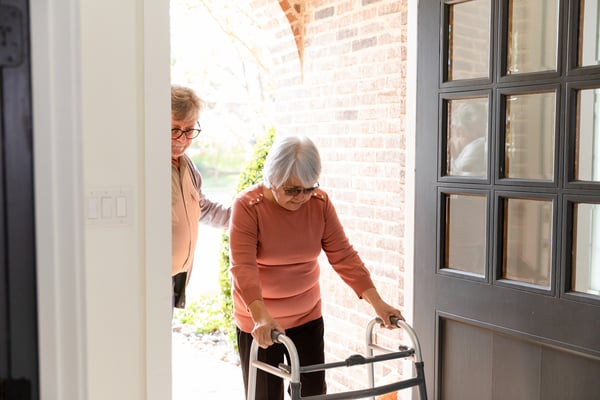
  • Mobility equipment, such as walking sticks, walking frames and wheelchairs
  • Self-care supports, such as over-the-toilet chairs
  • Bathing equipment, such as shower chairs and non-slip mats
  • Cognitive supports, such as pill (dosette) boxes labelled with the time or day, and clocks that show the time of day and day of the week
  • Daily activity supports, such as jar openers, cutlery with larger handles and laundry trolleys
  • Bedroom equipment, such as equipment designed to raise the height of a bed

Home Modifications

Changes to your home that improve safety and accessibility, such as:

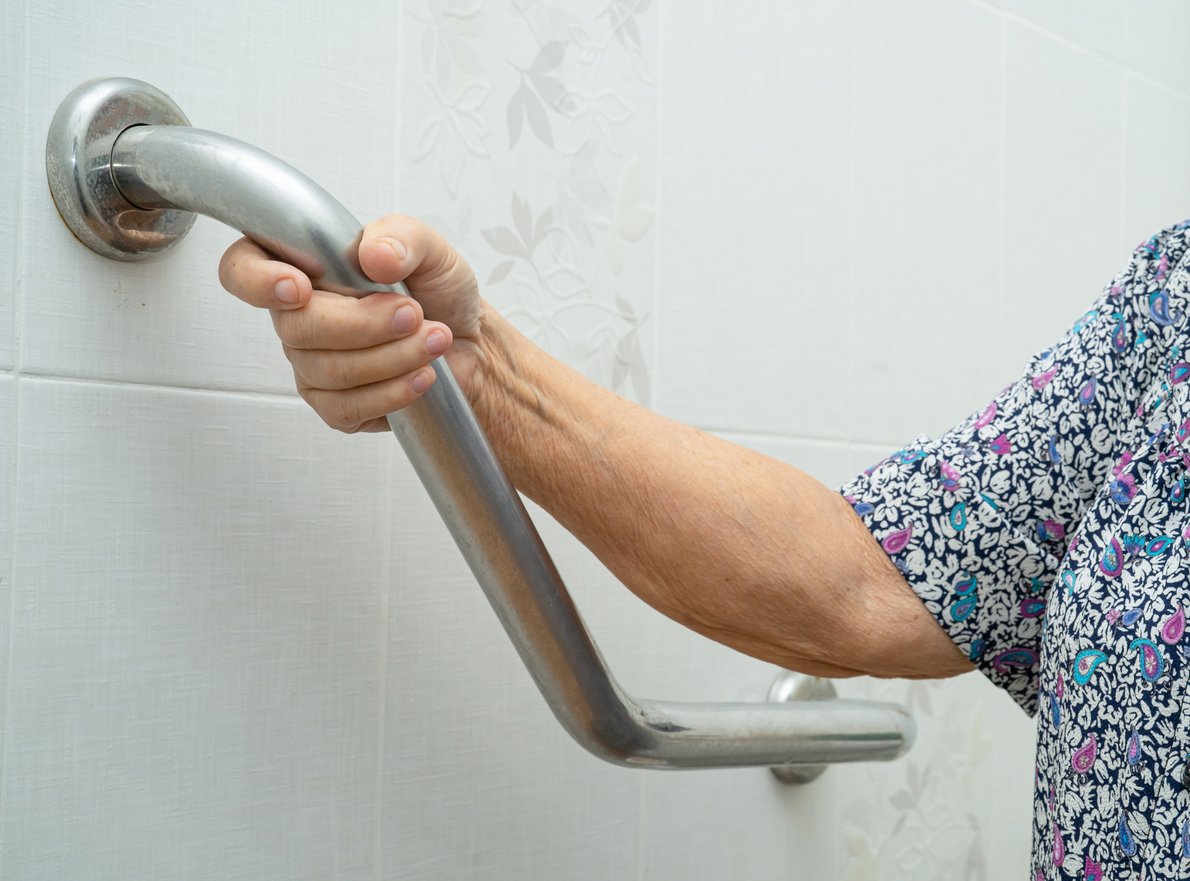
  • Grab rails in the bathroom, beside the toilet and at entryways
  • Ramps or step wedges to replace steps at the front or back door
  • Non-slip flooring in wet areas
  • A handheld shower hose and lever-style taps
  • A bidet or bidet toilet seat to make toileting easier and more independent
  • Bathroom redesign, such as replacing a hobbed shower with a level-entry one
  • Widening doorways or passages to fit a walker or wheelchair
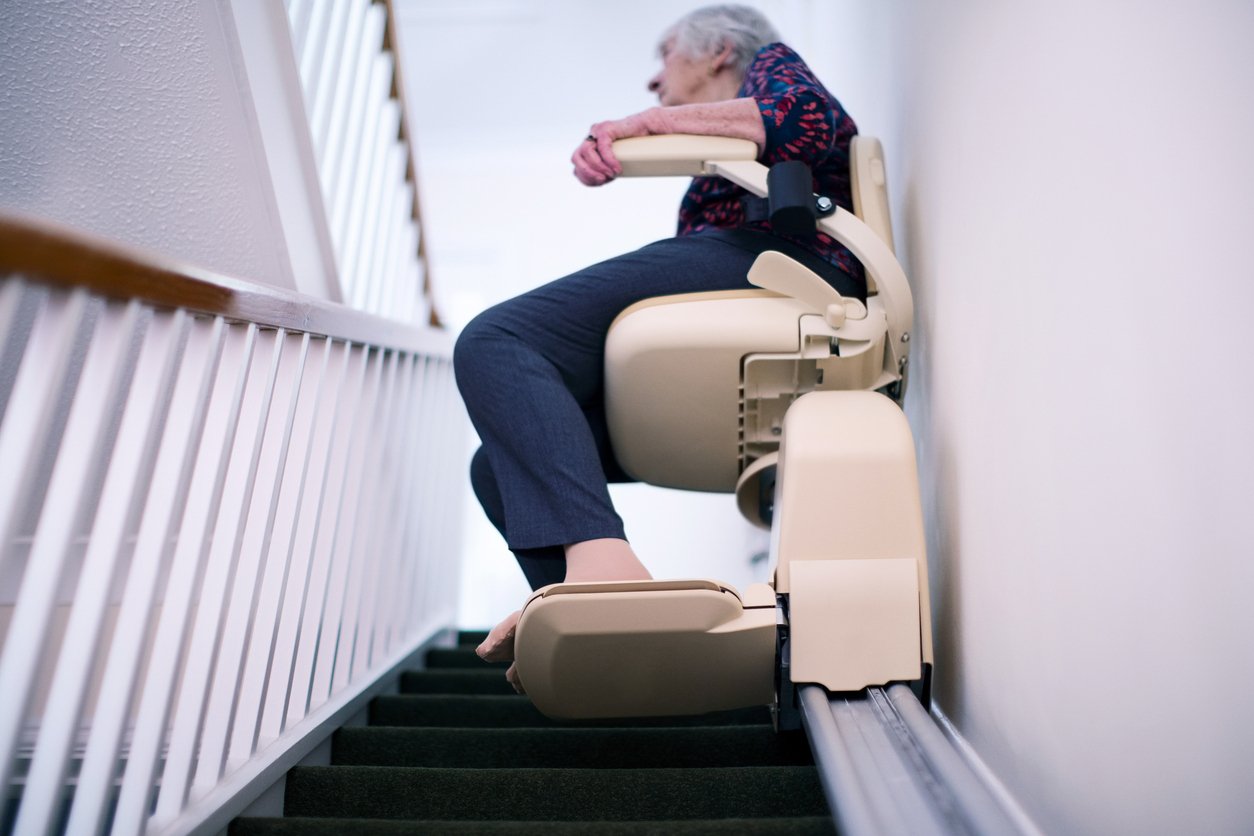
  • Stairlifts
  • Better lighting and light switches placed within reach

What difference can it make?

 Equipment and modifications sound small. What they change is not. 

Fewer falls

Most falls at home happen in the bathroom, on steps, and getting in and out of bed. A rail, a ramp or better lighting removes the hazard rather than asking you to be careful around it.

Independence and wellness for longer

The right equipment can help you keep doing everyday activities yourself, supporting your independence, confidence and overall wellbeing at home.

Easier daily tasks

Showering, dressing, cooking and getting out to the car takes less effort, less time, and less out of the rest of your day.

More confidence around the home

When you trust your bathroom, you stop avoiding it. Confidence is usually the first thing that goes and the first thing that comes back.

Support for carers

Equipment that reduces lifting, bending and supervising takes real physical pressure off a partner or family member, and often lets them go back to being a partner rather than a carer.

Staying at home for longer

Safety at home is one of the biggest factors in whether someone can keep living there. Small changes made early often make the difference between managing and not.

Common reasons people apply

Most people do not go looking for AT-HM funding. Something happens, or something has been building for a while, and it becomes clear the house is not working the way it used to. These are the situations we see most often.

After a fall

A fall does not have to be serious to change things. Often the first call comes from an adult child who has noticed a bruise their parent did not mention. An occupational therapist can walk through the house and find the spots where the next one is likely to happen.

Coming home from hospital

A hip replacement, a stroke or a longer stay can mean coming home to a house that no longer suits you. Equipment often needs to be in place before discharge, which is why hospital referrals are one of the most common routes into AT-HM.

When the shower becomes the hard part

The bathroom is the most common trigger by a long way. A high step into the shower, nothing to hold onto, and a wet floor is a combination most people manage until the day they do not.

When a walker or wheelchair will not fit

New equipment can expose the house. Doorways are too narrow, the hallway will not take a turn, the back step has no ramp. The equipment and the modification usually need to be sorted together.

When a partner is doing the lifting

If someone at home is helping you stand, steadying you in the shower, or lifting you into the car, that is a sign your environment needs to be doing more of the work. It is also a common reason a carer reaches burnout.

When things have changed gradually

There is no single event, just a slow narrowing of what you do. You have stopped using the back garden. You are showering less often. Nothing has gone wrong yet, which makes this the best possible time to make changes.

Who works out what you need?

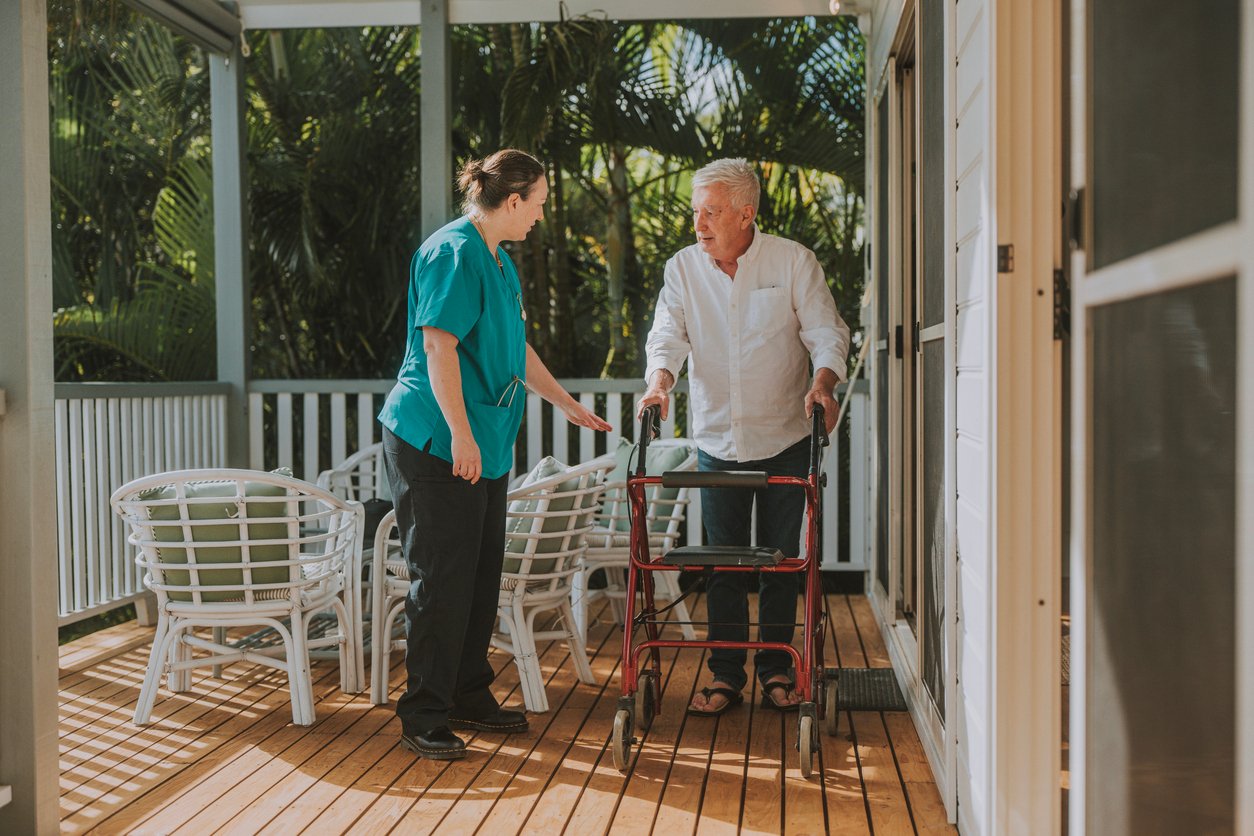
For most assistive technology and all home modifications, a qualified clinician completes a home assessment and provides recommendations and prescriptions before anything is ordered. This is usually an occupational therapist, and sometimes a physiotherapist.

The reason they visit your home is simple: it helps them understand how you move through your day-to-day life. Seeing your home environment allows them to identify opportunities to make everyday activities safer, easier and more comfortable. They can observe how you navigate different spaces, get in and out of bed, and move around at different times of the day.

This personalised approach means recommendations are based on your individual needs. Rather than relying on a standard checklist, your clinician considers your lifestyle, strengths and preferences, as well as the layout of your home, to recommend supports and modifications that are right for you.

There is no out-of-pocket cost for this assessment. The clinician’s time to assess, prescribe and make recommendations can be covered by your Support at Home funding under the Clinical Supports category or by your AT-HM funding.


lady and old woman talking
Assistive-technology

How we help

We make the process simple and coordinated, so you don’t have to manage it alone.

Your Suncare team will:

  • Arrange a clinical assessment if required
  • Help identify the right equipment or modification
  • Coordinate quotes and suppliers
  • Manage documentation and approvals
  • Organise installation or delivery
  • Provide guidance on safe use

Our team works together to make sure your supports are practical, appropriate and easy to use in your day-to-day life.

How we can help

From help around the house to clinical care and everything in between, Suncare offers a wide range of services tailored to your needs.

Here's what our Bundaberg team can support you with:

1

Help at home

We'll help keep things tidy and comfortable — inside and out.

  • Cleaning and household tasks
  • Laundry and linen changes
  • Meal preparation
  • Light gardening and yard maintenance

2

Personal care

Gentle, respectful support with the everyday things that matter.

  • Showering and bathing
  • Grooming and dressing
  • Medication reminders
  • Continence support

3

Nursing and Allied Health

Clinical support from qualified professionals, delivered in your home.

  • Nursing care and health monitoring
  • Wound care and medication management
  • Physiotherapy
  • Occupational therapy
  • Exercise physiology

4

Social support and connection

Because life is better when you're connected to the people and places you love.

  • Companionship and home visits
  • Community outings and group activities
  • Transport to appointments, shops, or events
  • Help staying in touch with family and friends

Who is AT-HM for?

You may be eligible if you:

  • Are approved for Support at Home
  • Have an aged care assessment that identifies equipment or home modification needs
  • Want to improve safety, accessibility or independence at home

Customers who have transitioned from Home Care Package funding may: 

  • Use unspent funds for AT-HM items, or
  • Be assessed for AT and/or HM funding if no unspent funds remain

If you’re unsure about your eligibility, feel free to reach out, we’re happy to guide you.
iStock-1303095591

What can be funded?

AT-HM funding can cover:

  • Approved items listed under the AT-HM Scheme
  • Clinician time to assess, prescribe and recommend solutions
  • Research, documentation and liaising with suppliers
  • Delivery, set-up, training and guidance on safe use
  • Your Care Partner’s time to coordinate quotes and arrangements

What can't be funded?

The scheme does not cover:

  • General home renovations
  • Home maintenance
  • General household expenses
  • Items excluded from the AT-HM list
  • Products funded through other programs

If something isn’t covered, we’ll explain your options clearly.


Funding & costs

AT-HM funding is short-term, usually for up to 12 months, and is separate from your ongoing Support at Home services budget.

Funding tiers include:

Assistive Technology

  • Low: up to $500
  • Medium: up to $2,000
  • High: up to $15,000 with supporting evidence

Funding above $15,000 may also be available in some circumstances, subject to additional assessment and approval.

Home Modifications

  • Low – up to $500
  • Medium – up to $2,000
  • High – up to $15,000 (capped)

Any approved assistive technology, related reviews or recommended home modifications are paid for through separate AT-HM funding. Contributions may apply to AT-HM and fall under the Independence services category.

You may also need to contribute towards the cost of assistive technology and home modifications. The amount the government pays will depend on:

  • Your ongoing and/or short-term classification
  • Any supplements you’re eligible for
  • The services, equipment and products you receive
  • How much you contribute towards your care

You cannot use your ongoing quarterly Support at Home funding to pay for Assistive Technology and Home Modifications (AT-HM), even if you have unused funds available.

If you transitioned to Support at Home from a Home Care Package (HCP), you may be able to use unspent HCP government funds towards AT-HM. When AT-HM is purchased, the cost will first be taken from your unspent HCP funds. If you have also been allocated AT-HM funding, any remaining eligible costs can then be claimed from your AT-HM funding account.

Buying and keeping your equipment

Can I buy my own equipment?

You have a real say in what gets chosen, but the purchase itself needs to go through the scheme. Your Care Partner arranges it with an approved supplier so the item meets the safety and quality requirements AT-HM funding is tied to.

If you buy something yourself before it has been approved, it generally cannot be reimbursed. So if you have seen something you like, or you have been recommended a particular brand, tell us before you buy it. In most cases we can arrange the same item through the scheme.
iStock-1126651533
iStock-2280633494

Can I keep the equipment?

In most cases, yes. Items bought with AT-HM funding are yours to keep and use for as long as you need them. Home modifications stay with the house.

Some higher-cost items may be supplied on loan rather than purchased outright, and would be returned when you no longer need them. Your Care Partner will tell you which applies before anything is ordered, so there are no surprises later.

How to get started

  1.  Start with an aged care assessment through My Aged Care.
     Your assessor will talk with you about your health, mobility and goals.  

  2.  If restorative care is right for you, you’ll be approved under the Support at Home program.  

  3.  Choose a trusted provider, like Suncare, to help plan and deliver your care.  

  4.  Together, you’ll develop a personalised goal plan outlining what you want to achieve and the services needed.  

     If your needs change while you’re receiving services, your Restorative Care Partner will work with you to review your goals and update your plan.  

Why choose Suncare for assistive technology and home modifications?

Getting the right equipment is only part of it. You also need someone who understands your needs, your home and how the aged care system fits together.

Suncare has been helping Queenslanders live well at home since 1970. As a not-for-profit Support at Home provider, we bring together Care Partners, allied health professionals and trusted suppliers to make the AT-HM process easier to navigate.

With Suncare, you’ll have,

  • A dedicated Care Partner to help coordinate the process from assessment through to installation
  • Assessments from Suncare's own Occupational Therapists and Physiotherapists, rather than being referred to a third-party clinician
  • No out-of-pocket cost for the clinical assessment, recommendations or guidance on using your equipment safely
  • Help with quotes, suppliers, documentation and approvals
  • Support with delivery, installation and learning how to use equipment safely
  • One team coordinating the process, so you're not left chasing different suppliers or providers

Frequently asked questions

What is assistive technology?

Assistive technology is any product or piece of equipment that helps you do something that has become harder to do on your own. It can be as simple as a jar opener or a raised toilet seat, or as involved as a powered wheelchair or a falls alarm you wear around the house.

The point of it is not the equipment. It is getting back the task the equipment makes possible, whether that is making your own cup of tea, having a proper shower, or getting out to the shops on your own.

What are home modifications?

Home modifications are physical changes to your home that remove the things making it unsafe or hard to move around. Most homes were built for the people we were, not the people we become. A step at the back door, a slippery bathroom floor, a doorway too narrow for a walker: none of these were a problem twenty years ago, and all of them can become one.

The signs usually creep up rather than arrive all at once. Gripping the vanity to stand up. Avoiding the second bathroom because of the step. Sleeping in the lounge room because the stairs are too much at night. Modifications deal with the house rather than asking you to work around it.

What is the difference between assistive technology and a home modification?

Assistive technology is equipment you use. A home modification is a change to the building. A shower chair is assistive technology; a grab rail screwed into the shower wall is a home modification. The distinction matters because they are funded and assessed slightly differently, and because home modifications always need a clinician's recommendation. Many people end up needing both, and they are usually arranged at the same time.

How do I access At-HM funding?

AT-HM is assessed as part of your aged care assessment through My Aged Care. If approved, your funding is allocated separately from your regular Support at Home services. If you need help organising an assessment, our team can guide you.

Is there a time limit to use my AT-HM funding once it’s approved?

Yes. Once your AT-HM funding is assigned, you have around 8 weeks to activate your funding with a provider. It’s important to know that your chosen provider isn’t notified directly when your AT-HM funding is assigned. Once you receive your assignment letter, contact Suncare so we can help you get started. Once a provider has commenced your funding episode, you will generally have 12 months to use your funding.

This timeframe helps ensure your supports are delivered in a timely way so they can make a real difference to your safety and independence at home. If more time is needed due to supplier availability or special circumstances, your Suncare Care Partner can help you request an extension or reassess the plan so your funding isn’t lost.

Do I need a clinical assessment?

For most Assistive Technology items, as well as all Home Modifications, your needs are assessed by a qualified clinician such as an Occupational Therapist or Physiotherapist. The clinician’s role is to evaluate your situation and recommend solutions that best suit your requirements, ensuring the support provided is both effective and appropriate. Importantly, there is no out-of-pocket cost for this assessment. This means you can access professional guidance and recommendations without worrying about additional expenses.

Can I choose my own supplier?

Your Care Partner will coordinate with approved suppliers to ensure items meet scheme requirements and safety standards. We’ll always involve you in decisions and explain your options clearly.

How long does it take to receive equipment?

Timeframes vary depending on the item and supplier. Once funding is approved and quotes are accepted, many items can be arranged within a few weeks. Larger home modifications may take longer.. We’ll keep you informed every step of the way.

Can AT-HM funding be used for major renovations?

AT-HM funding can support major modifications to improve accessibility such as bathroom redesign or widening doorways or passages. However, high tier funding is unlikely to cover the full cost of extensive renovations. We're here to help you navigate your options and find the best solution for your needs.

What happens if my needs change after the equipment arrives?

Needs change, and the first thing you were given is not always the thing you need six months later. Tell your Care Partner. Depending on how much of your AT-HM funding remains and how long you have had it, we may be able to arrange a review, a different item, or a further assessment. If your funding episode has closed, your ongoing needs can be looked at as part of your next aged care assessment.

Can I get AT-HM funding if I am on the Commonwealth Home Support Programme?

The AT-HM Scheme sits within the Support at Home program. If you are receiving services through the Commonwealth Home Support Programme, speak to us about what is available to you and whether an aged care assessment through My Aged Care is the right next step. We can talk you through both.

Are there any home modification costs I may need to cover myself?

Some costs associated with your home may not be covered by AT-HM funding. Before any work begins, you’ll receive a clear description of the proposed modifications and costs, including any contributions you may need to pay, and you’ll need to provide written approval for the work.

AT-HM funding also doesn’t cover temporary accommodation or alternative facilities you may need while modifications are being completed. For larger or more complex modifications, building approvals, qualified trades and appropriate insurance may also need to be considered. Suncare can help you understand what applies to your proposed modification before work begins.


Ready to make your home safer and easier to live in?

If you or someone you care for could benefit from Assistive Technology or Home Modifications, we’re here to help.

Email

info@suncare.org.au

Phone

1800 786 227